

WestJet Bargaining Committee
Last updated: July 9, 2026
Strike Vote Now Open
The WestJet Component mainline strike vote is open from July 8–15 — we strongly encourage all members to vote YES. A decisive yes will give our bargaining committee the mandate and leverage needed to push effectively in the next round of negotiations. If you have any hesitations or questions, please reach out to your Base VP or any member of the Executive to discuss your concerns, and be sure to read the recent president’s message from Alia for important context. This is an integral part of the collective process; your participation and a strong yes vote are essential to protect our rights and strengthen our position at the table.
Bargaining CA2: Your Voice, Our Strength
Welcome to the central hub for all information regarding the upcoming collective bargaining negotiations for your next agreement with WestJet Mainline. We are committed to keeping you informed every step of the way as we work towards securing a fair and equitable contract that reflects the hard work and dedication of our WestJet Component (CUPE 8125) members.
This page will be your go-to resource for updates, important documents, and opportunities to engage in the bargaining process. We believe in transparency and member involvement, and we encourage you to check back regularly for the latest news.
Get Involved
Your participation is crucial! As we move closer to and through negotiations, there will be opportunities for you to get involved and show your support. Stay tuned to this page and the bargaining blog for information on how you can contribute to achieving a strong collective agreement.
We are stronger together. Stay informed, stay engaged, and stand with your Bargaining Committee.


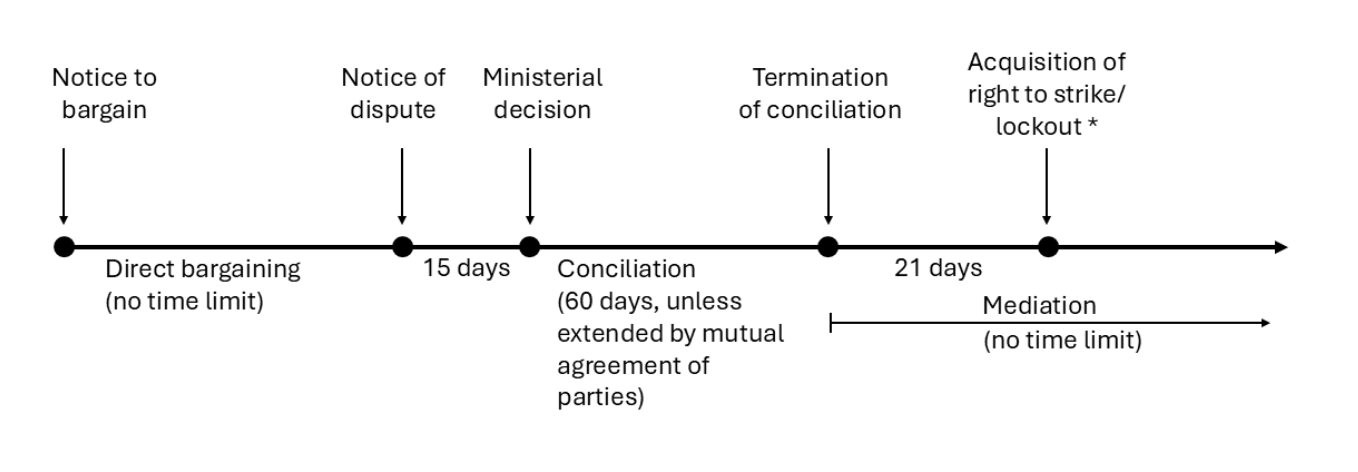
UNDERSTANDING THE BARGAINING PROCESS
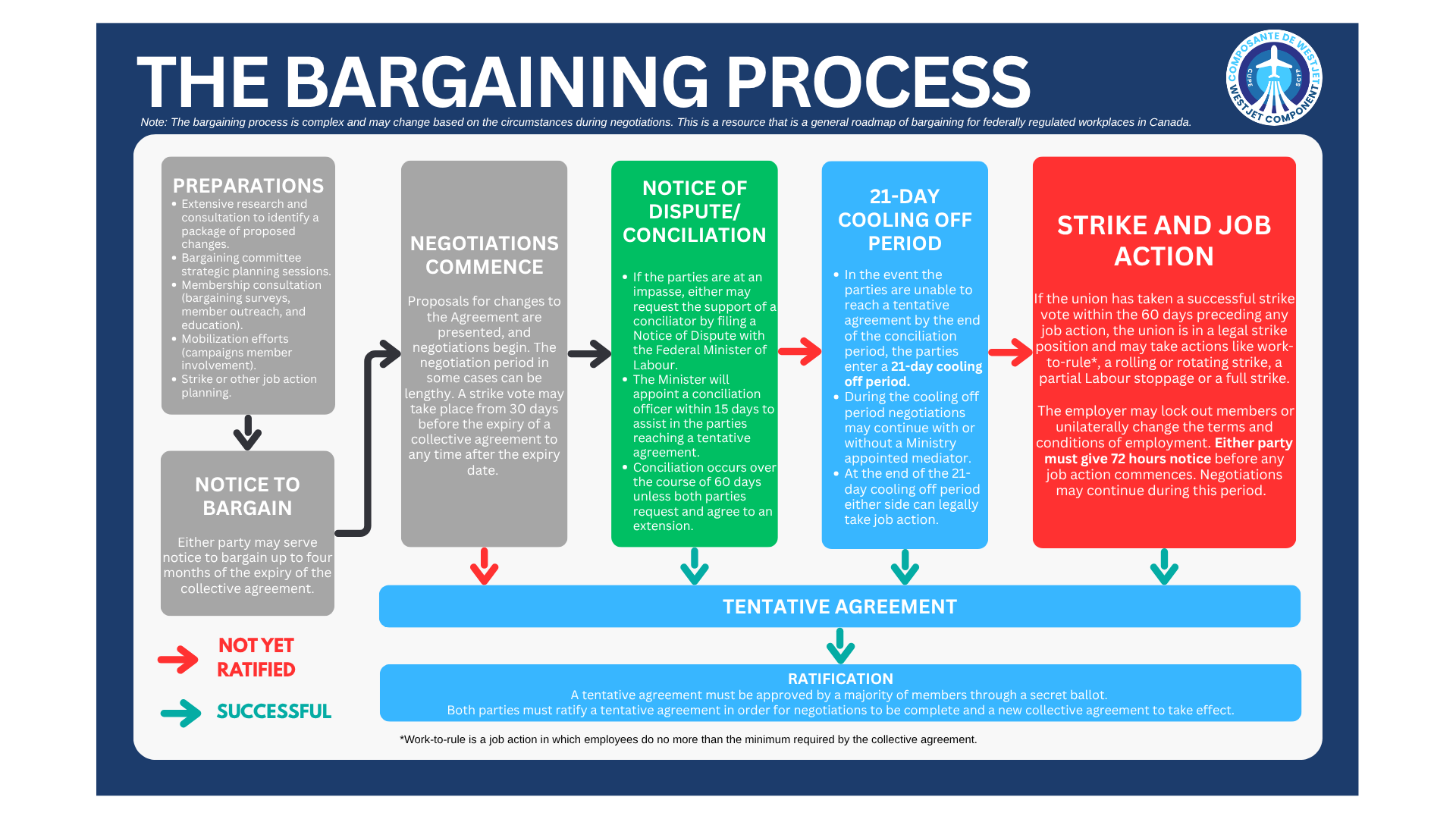
Bargaining Timeline
A timeline to help members visualize the legal bargaining process under the Canada Labour Code.
In the Jumpseat Podcast
The In the Jumpseat Podcast is a new and valuable resource available on popular platforms such as Spotify, Apple Podcasts, and YouTube. This podcast is dedicated to providing our membership and other listeners with clear, concise, and informative discussions about what is happening in the bargaining room, along with other important topics and educational content. Specifically designed for WestJet Cabin Crew Members, it offers timely updates on negotiation progress, union initiatives, and critical workplace issues. By keeping members well-informed and connected, the podcast fosters active engagement throughout every stage of the bargaining process.


Your Bargaining Committee:
Advocating for You!
Your elected Bargaining Committee is comprised of dedicated union members who will represent your interests at the negotiating table. They have volunteered their time and expertise to advocate for the best possible outcome for all of us. Get to know the individuals who will be working tirelessly on your behalf:
-
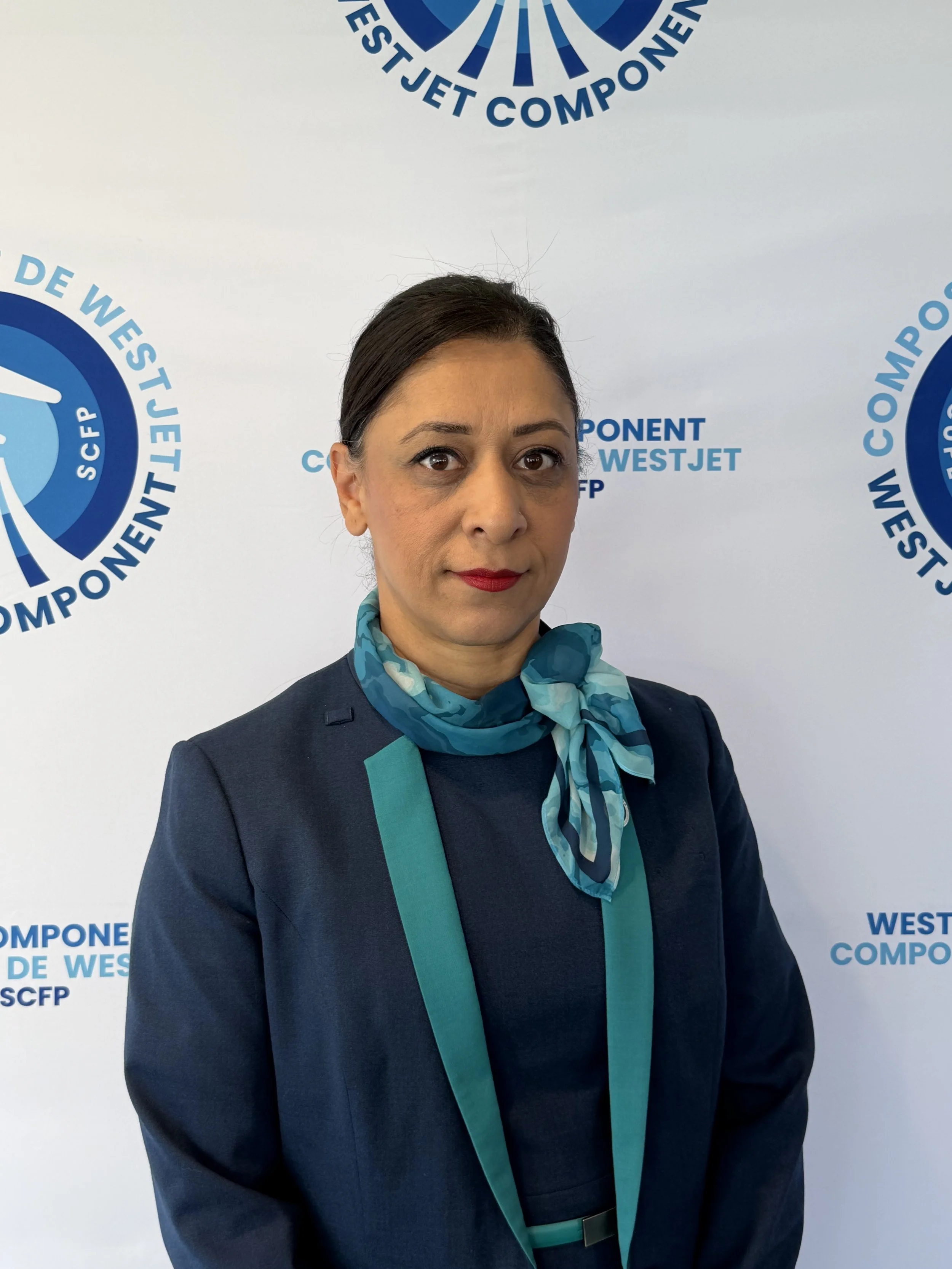
Alia Hussain
President
-
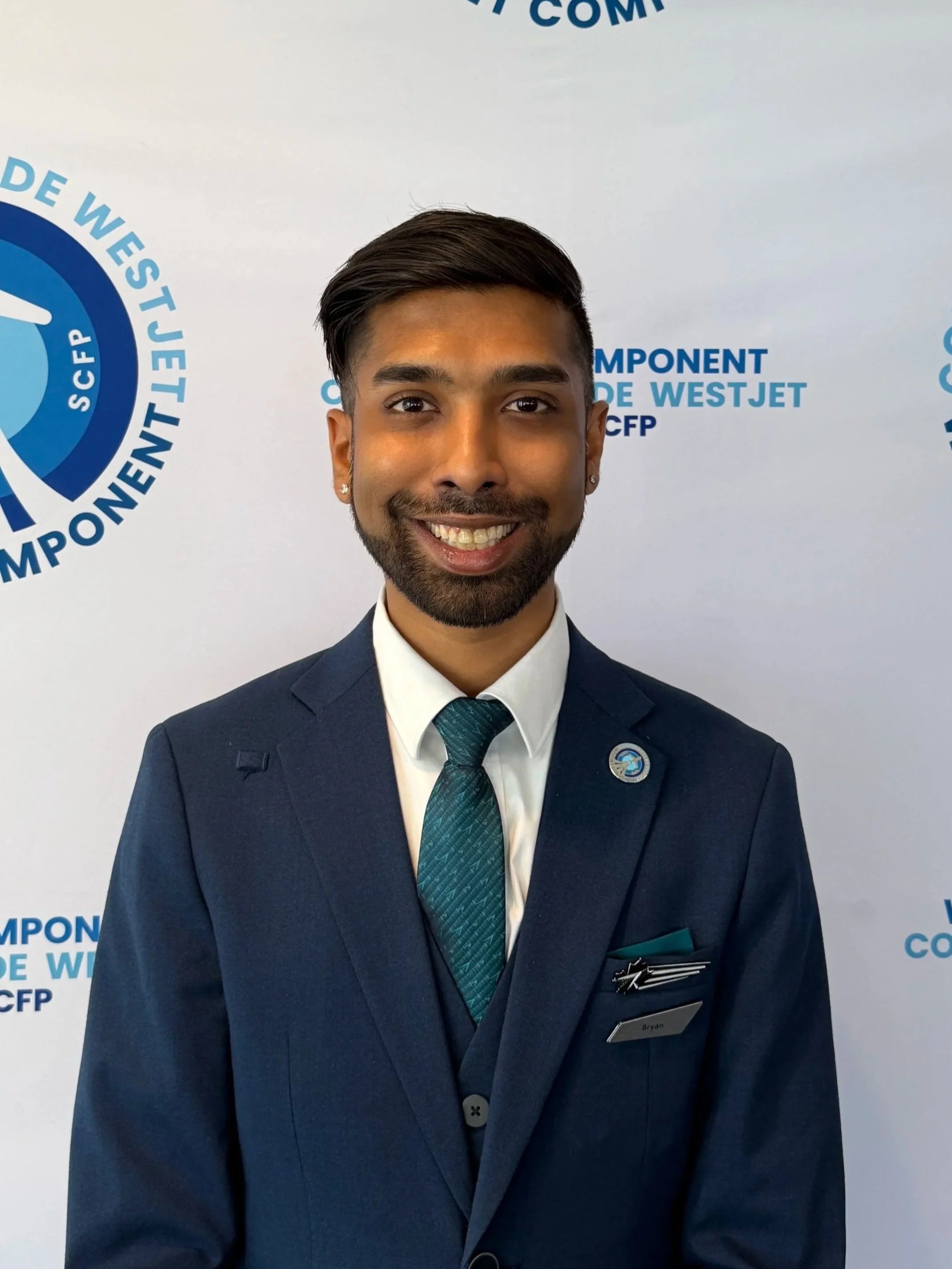
Bryan Hansraj
WestJet Unit VP
-

Jean-Francois Laframboise
YVR/YEG Rep
-

Shane Campbell
YYC Rep
-

Justin Patterson
YYZ Rep
-

Cailey Millard
YWG/YUL Rep
-

Alex Grigoriev
Local Executive - Alternate
-

Cameron Jones
Local Executive - Alternate
Missed Our "Bargaining Learning Series"?
If you were unable to attend our "Bargaining Learning Series" Teams event, you can now watch the recording here. This informative session provided valuable insights into the bargaining process, answered frequently asked questions, and offered an opportunity to learn more about how your collective agreement is negotiated. We encourage all members to watch this recording to gain a better understanding of what lies ahead.
Bargaining Blog: Stay Up-to-Date
Every official update, proposal, and membership announcement regarding our mainline negotiations is archived below in chronological order. Instead of digging through your email inbox or worrying if you missed a critical notification, use this central repository to instantly track table progress, review federal conciliation timelines, and verify official communications.
Most Recent Communications:
Rumour Busting:
We are in active negotiations and will continue to work towards reaching a deal at the table. Should job action be contemplated, further communications will be released to the Membership. The Union always recommends that you seek clarity directly. Please remember we are NOT in a strike position. This is to clarify the any misinformation online in regard to what strike pay would be, how it’s paid and where it comes from. We felt it prudent to advise and inform all members so they were aware, and it can be clarified.
As always, if you require further information, please reach out at wjcomponent.ca/contact.
Q: What is the CUPE National Strike Fund?
CUPE National puts aside 5% of any per capita tax (Union Dues) for strike benefits, campaigns to avert strikes.
Q: When does strike pay begin?
A member who is entitled to strike benefits under Strike Fund Regulations shall receive strike pay beginning on the first day of the strike.
Q: How much money does a member receive while out on strike?
Information in the CUPE National Strike Pay:
National Strike fund provisions:
Week 1-5 of the strike, maximum strike pay is $350 for a minimum of 20 hours of picketing or completing other assigned duties.
Week 6-11 of the strike, strike pay is increased to $375 per week, for a minimum of 20 hours of picketing or completing other assigned duties.
Week 12 - 15 of the strike, strike pay is increased to $400 per week, for a minimum of 20 hours of picketing or completing other assigned duties.
Week 16+ of the strike, strike pay is increased to $450 per week, for a minimum of 20 hours of picketing or completing other assigned duties.
Note: The normal strike schedule is 5 days a week, 4 hours per day.
Information in the Airline Division Strike Pay:
The Division Defence Fund shall pay benefits of $30.00 per day, up to a maximum of $150.00 per week, in addition to the CUPE Strike Fund entitlement for the first six months of a work stoppage.
In the event of a work stoppage progressing beyond six months, the Council of Presidents has the discretion to increase its contributions to striking or locked out members by up to $50.00 per week.
Benefits will be paid in the case of a strike or lockout recognized by the CUPE National Strike Fund Regulations for the duration of the work stoppage or until Division funds are depleted.
What does a member have to do to be entitled to strike pay?
To be eligible for strike benefits, a member must fulfill the following requirements:
be in good standing, according to the CUPE Constitution, before a strike begins. For the purpose of this provision, a Rand Formula (Union dues) payee who makes regular contributions to the Strike Fund is considered to be a member in good standing;
complete and sign a Strike Pay Application in the form provided by Picket Captain
been on the active payroll of the employer who is subject to the strike action at the beginning of the strike; and,
participate in the strike by performing assigned strike duties for at least 20 hours per calendar week. However, when deemed appropriate by the Strike Benefits Committee, and when approved by the National Secretary-Treasurer, schedule and hours of picketing can be designed differently to reflect the workplace and/or accommodate a member or group of members.